
The Hantavirus Chronicles
May 15, 2026

Today’s guest columnist is Mike King, the retired health and medicine editor of The Atlanta Journal-Constitution and author of the award-winning book, “A Spirit of Charity: Renewing the Bond between America and its Public Hospitals.”
Ocean and river cruises are associated with retirement life nearly as much as pickleball and golf. Exact numbers are hard to come by, but industry publications show as many as 9 to 12 million passengers over the age of 65 board ocean cruise ships annually, and 700,000 to 1.2 million more hop on river cruises.
Naturally then, the recent outbreak of the often-fatal hantavirus aboard the 170-passenger MV Hondius, sailing on an eco-tourism cruise in the Atlantic, understandably worries many retirees who love to cruise.
The virus apparently infected at least a dozen passengers through close contact and went undetected for several days. Two of the three passengers who died from the rare, human-transmission form of the virus were 69 years old. The other infected patients, all now offboard, are being monitored closely.
Already, news reports about the Hondius outbreak have drawn comparisons to the early days of the Covid pandemic in 2020, where some of the first documented cases were onboard an ocean vessel.
Is ocean and river cruising safe?
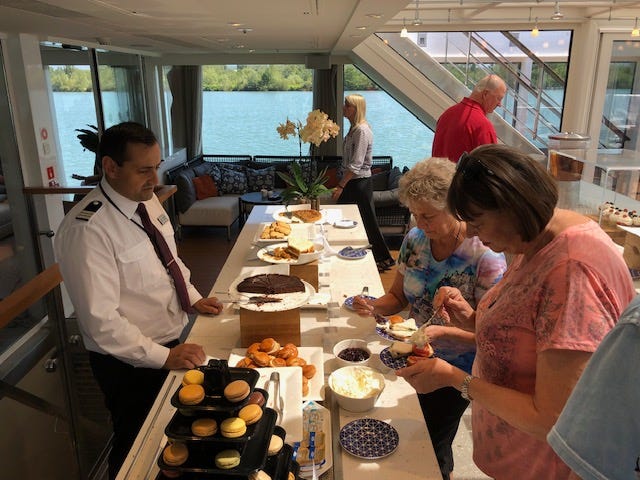
The short answer from the experts is yes. The risk of becoming infected by a deadly virus onboard a ship is exceedingly low. But as in any location where people are in proximity for days at a time — sharing meals, elevators, going through buffet lines, attending small venue concerts, riding in tour buses — it’s always wise to be cautious. There can be nasty bugs lurking among your fellow passengers, even if they aren’t as serious a hantavirus.
People typically get infected with hantavirus by inhaling particles of rodent droppings or urine. This strain, known as the Andes virus, is thought to be the only form spread through human contact. The working theory is that the outbreak started with a passenger contracting the Andes virus by picking it up from a rat while away from the ship and then carrying it onboard. There are no documented cases of that happening before this outbreak.
And, like the novel Covid virus in 2020, hantaviruses are not at all typical of the more common viral outbreaks associated with cruising.
According to the CDC, norovirus, an intestinal bug that is easily passed from human to human, is so prolific that the agency requires ships where more than 3 percent of the passengers or crew are showing symptoms, to report the outbreak immediately and take remedial steps to safeguard passengers.
Indeed, while watching developments on the Hondius, the CDC was also monitoring a norovirus outbreak on a Princess Cruise Line ship in the Caribbean that sickened 145 passengers and 15 crew members.
Other bugs show up to make passengers and crew members ill on ships and river cruises. These include E.coli, usually contracted from eating contaminated food touched by someone infected, and Legionnaire’s disease, which often starts with poorly controlled water and ventilation systems.
How to Protect Yourself
The CDC suggests that before booking a cruise, and while onboard, there are easy ways to reduce the risk of getting sick.
Start by choosing newer, well-rated ships and cruise lines. The CDC maintains a publicly available vessel sanitation program that keeps track of outbreaks on ocean and river vessels. Stay current on your vaccines. Purchase medical travel insurance in case your trip needs to be cut short.
Once onboard, if the ship reports any passengers have become ill, wash your hands before every meal, avoid large buffets, and consider wearing a mask in crowded indoor areas. If you vomit or have diarrhea, check in with the ship’s medical center.
And, be aware that older travelers are always more susceptible to outbreaks, especially those with heart and lung issues and compromised immune systems.
In short, the hantavirus outbreak on the Hondius, as frightening as it was, appears to be an outlier. So don’t give up on shipboard travel, but cruise carefully.
Stay safe, be kind, and don’t look away.
Philip Moeller is the principal author of Simon & Schuster’s Get What’s Yours series of books about Medicare, Social Security, and health care.